New York, NY
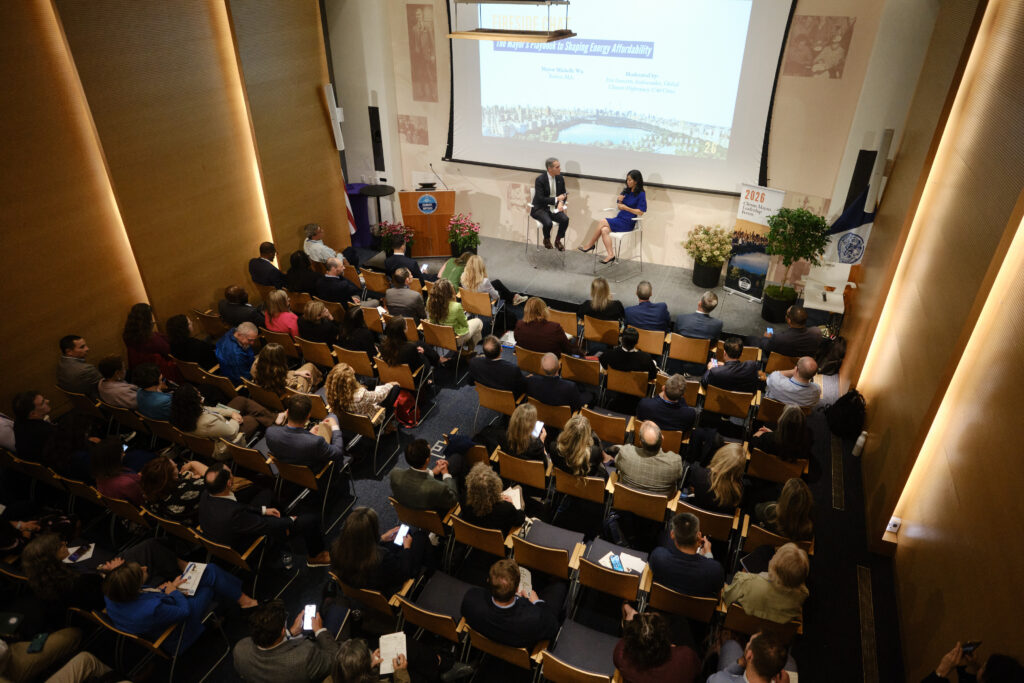
Last week, Climate Mayors brought together 40 mayors and over 100 partners at our annual Climate Mayors Leadership Forum during New York Climate Week. Held at the Historic Roosevelt House Public Policy Institute, the Forum created space for leaders from across the country to exchange solutions on energy affordability, resilient housing, and the infrastructure our communities depend on. More than an opportunity to uplift the work happening in cities, it was a chance to bring those local solutions into a larger national conversation. Mayors didn’t just talk about climate action, they showed what it looks like in practice.
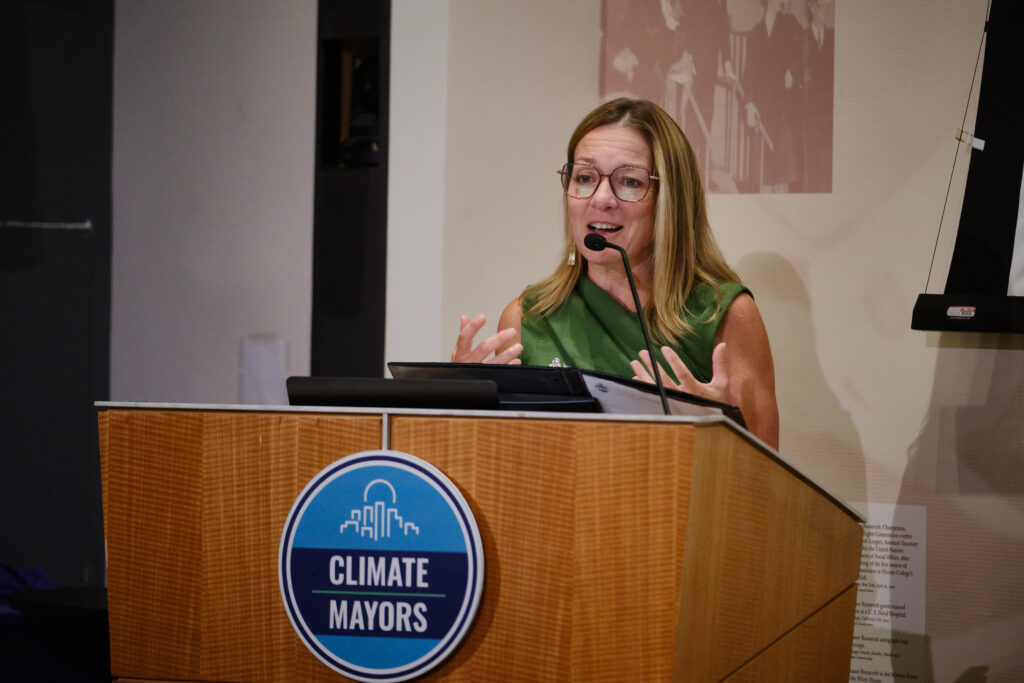
The forum opened with remarks from Climate Mayors Chair, Boise Mayor Lauren McLean who expressed pride in our accomplishments over the past year, emphasizing that mayors are prepared and committed to addressing climate and community challenges.
She highlighted the launch of our data center playbook which is helping cities navigate the rapidly evolving data center landscape, Climate Mayors’ first-of-its-kind extreme heat messaging toolkit that’s improving how mayors communicate during extreme heat events, and our Unscripted podcast where mayors are sharing inside stories of what it takes to turn climate policy into action.
Mayor McLean also shared how Boise is helping households take practical steps to reduce energy costs while supporting her city’s long-term climate goals and reflected on how energy, economic development, affordability, and resilience will continue to shape Climate Mayors’ priorities through the remainder of 2026 and beyond.
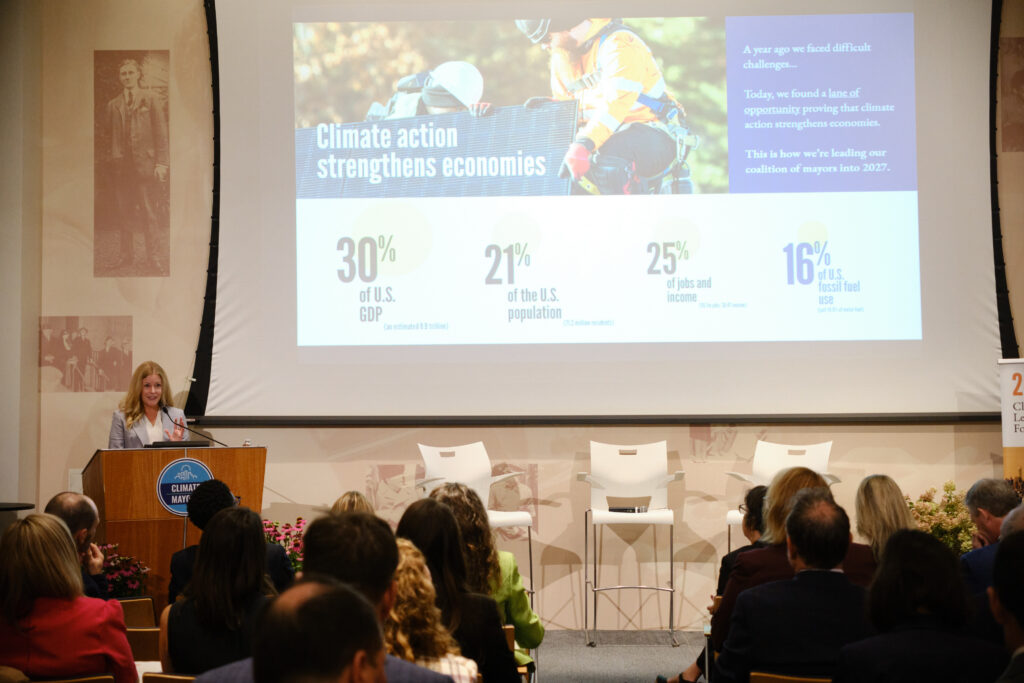
Climate Mayors Executive Director Kate Wright unveiled The Climate Mayors Economy a first-of-its-kind research agenda, which presents measurable, quantifiable data on the impacts our network has across the country.
In partnership with Greenline Insights, this research defines the Climate Mayors Economy as the collective GDP and fuel consumption of Climate Mayors member cities. The report shows how mayors have grown their economies while reducing fossil fuel use, translating into household savings. In short: Maintaining this pace could save households $38.4 billion over the next decade. The Climate Mayors Economy is strong, and its progress is measurable!
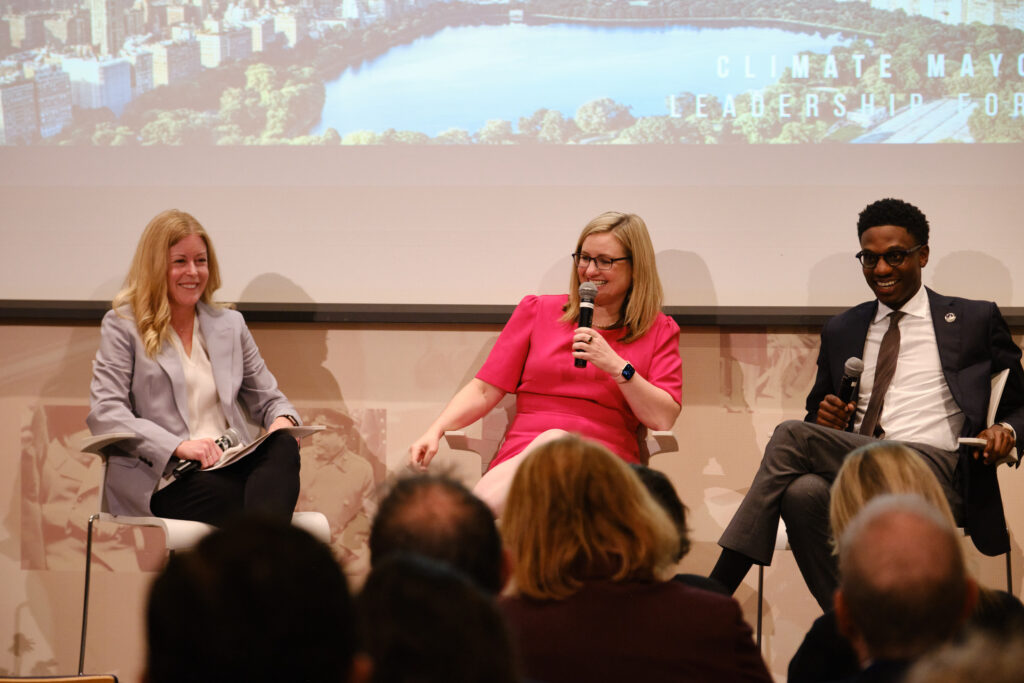
Phoenix Mayor Kate Gallego and Cleveland Mayor Justin M. Bibb participated in the panel From City Hall to the Grid: Governing in an Age of Energy Disruption. Both mayors stressed that it is critical for cities to connect the dots between energy, affordability, climate resilience, and economic growth to build a more sustainable future.
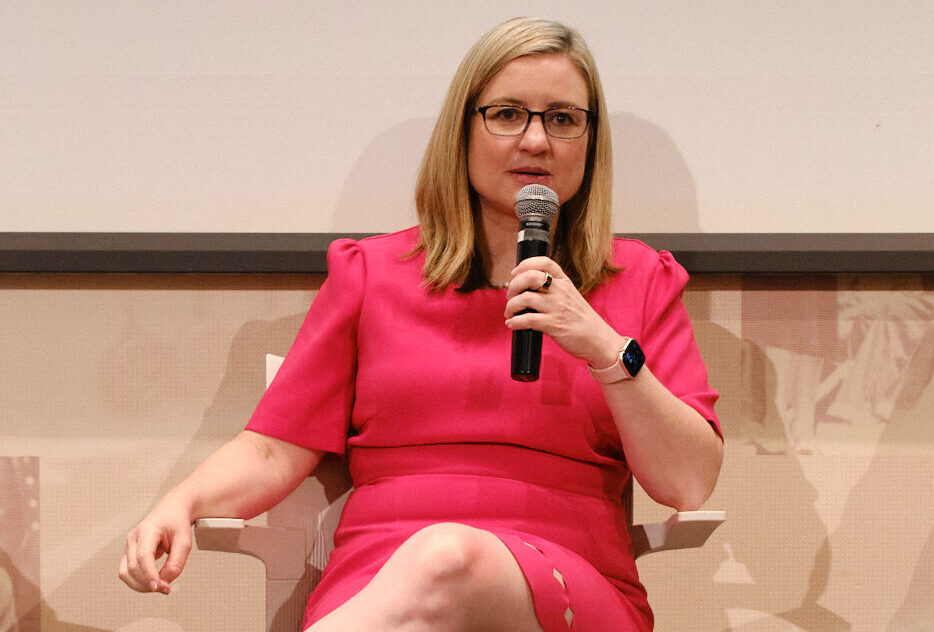
Mayor Kate Gallego emphasized the importance of energy affordability as the fastest and cleanest way to reduce costs for residents while limiting the need for new power generation. She urged mayors to manage the energy and water impacts of data centers proactively and emphasized that mayors can achieve far more when they act collectively. She also highlighted Phoenix’s efforts to reduce household energy and water use, while raising concerns that surging electricity demand is driving investments in new power plants and straining existing energy infrastructure.

In a city that’s working to address aging energy systems and the challenges of deferred maintenance and rising costs, Mayor Justin M. Bibb discussed The Cleveland Era and how he is leveraging opportunities to improve resilience through energy-efficient buildings, solar development, and strategic infrastructure investments. He reminded fellow mayors of Cleveland’s industrial legacy, and why it’s important for emerging industries to have guardrails that protect residents while creating jobs and opportunity.
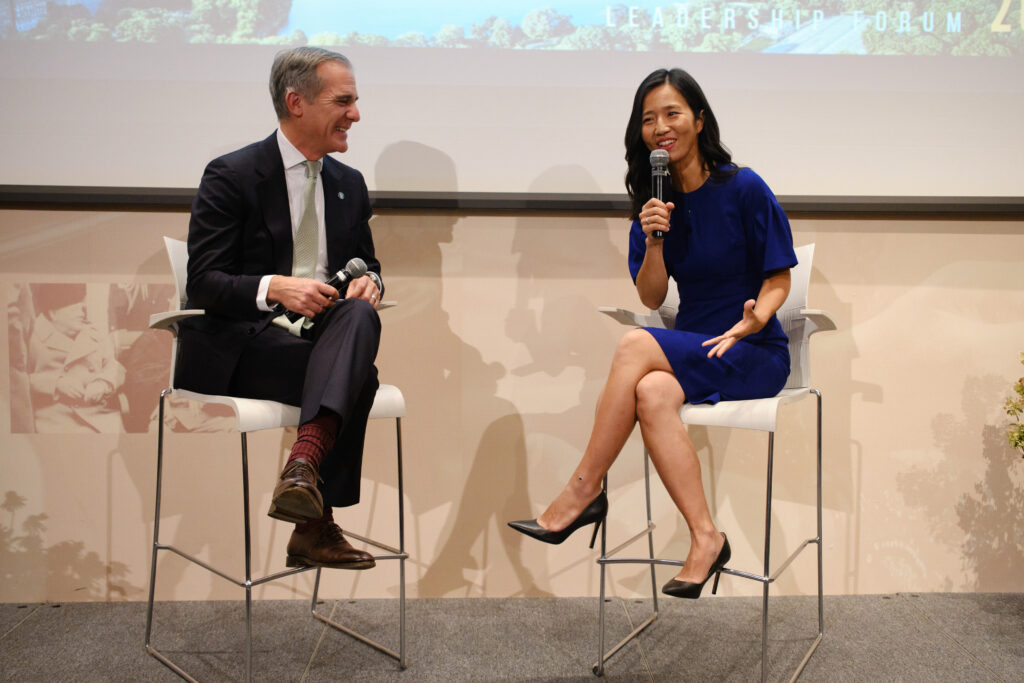
The Fireside Chat: The Mayor’s Playbook to Shaping Energy Affordability with Boston Mayor Michelle Wu, moderated by Eric Garcetti, Ambassador, Global Climate Diplomacy, C40 Cities explored how mayors are advancing energy affordability, even as climate change becomes harder to talk about politically.
Mayor Wu reflected on how cities can increasingly frame their work around the issues residents care about most: affordability, clean air and water, public health, jobs, and economic opportunity. She discussed the Boston Energy Saver program, a one-stop shop that’s helping residents and businesses navigate rebates, incentives, audits, weatherization, and heat pump installation. She also highlighted Boston’s municipal aggregation program, which provides residents access to cleaner, lower-cost electricity. By creating a one-stop shop, the City of Boston is on track to install 5,000 new heat pumps, weatherize 10,000 homes and deploy $300 million in decarbonization incentives through an MOU with utilities.
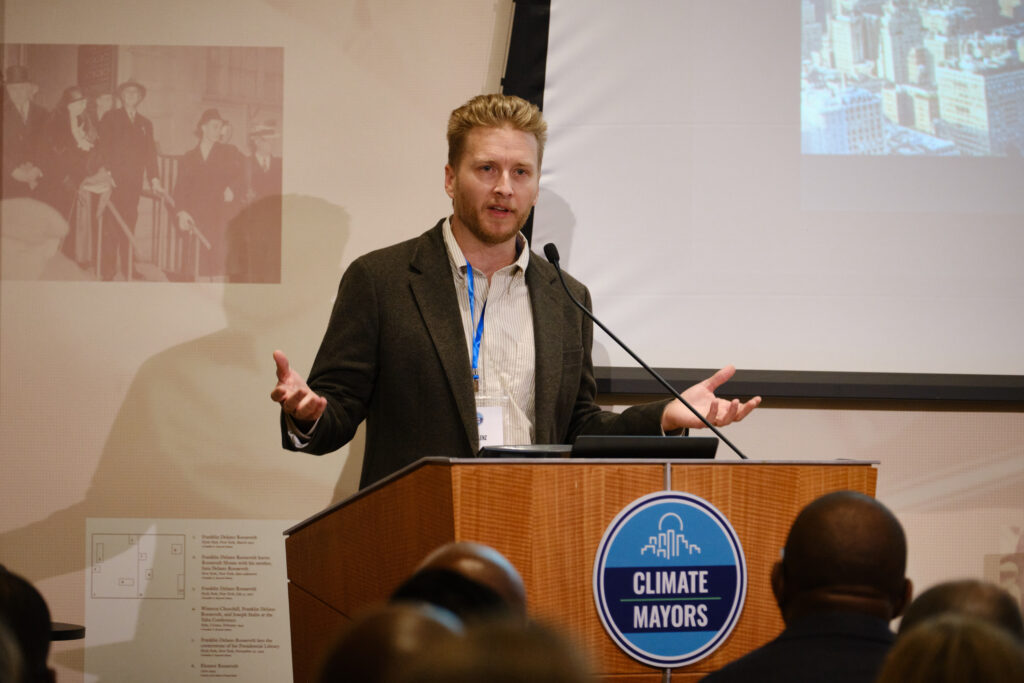
Climate Mayors heard from Adam Lenz, Head of Sustainability & Environment at Waymo, who spoke about the role of shared electric mobility, safer streets, and stronger transit connections. He shared how Waymo is working to reduce reliance on personal vehicles, improve safety for pedestrians and cyclists, and expand access to cleaner transportation through partnerships with cities and transit agencies. These efforts support more sustainable, transit-oriented communities while advancing local climate and mobility goals.
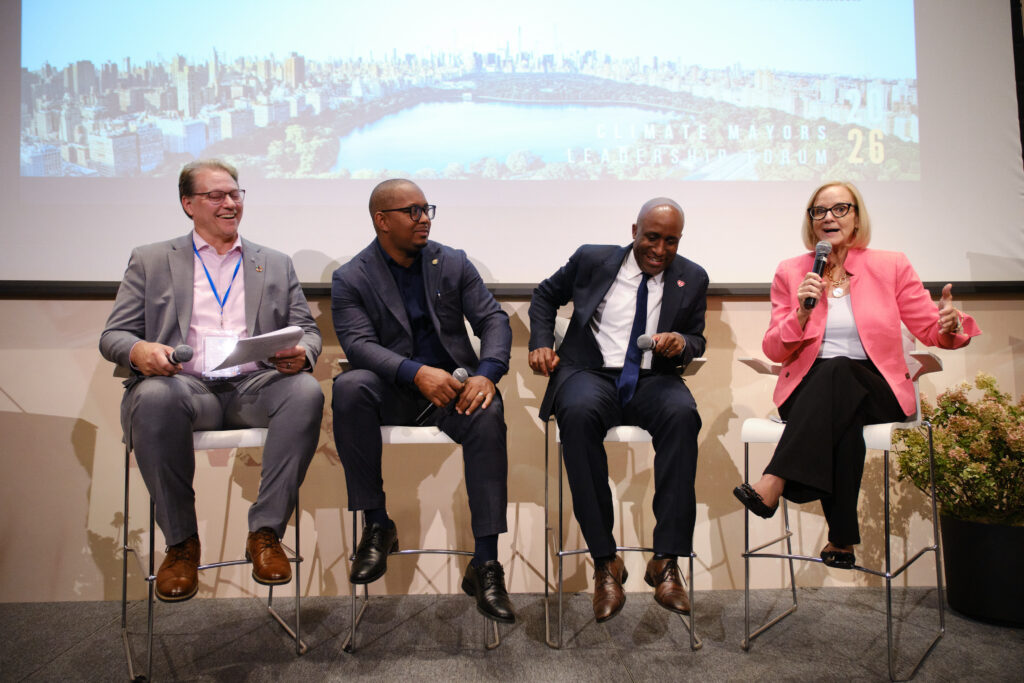
Housing affordability was a topic high on our mayors’ agendas. We heard from Long Beach Mayor Rex Richardson, Kansas City Mayor Quinton Lucas and Miami Mayor Eileen Higgins. The panel, Building Homes that Strengthen Community Resilience, moderated by Illya Azaroff, President of the American Institute of Architects, explored the intersection of climate resilience, housing affordability, and economic opportunity.
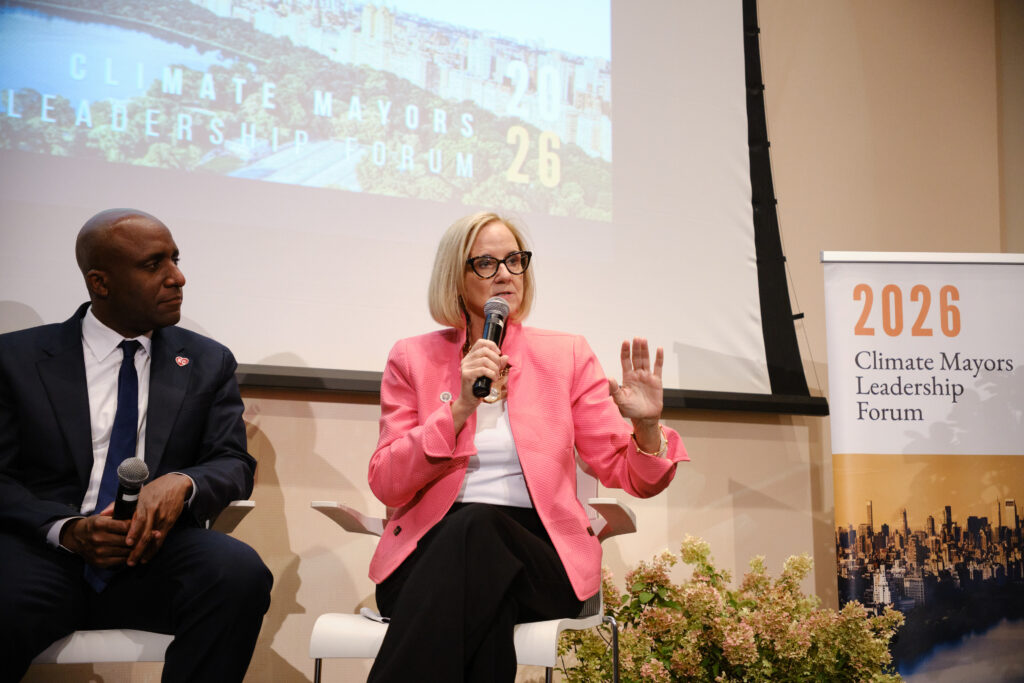
Mayor Higgins shared how flooding, rising insurance costs, and extreme heat are straining Miami residents. She emphasized that the key to economic prosperity is building neighborhoods of worth. By combining affordable, workforce, and market-rate units, the city is attracting private investment, created thousands of housing units, and revitalized neighborhoods.
Mayor Lucas and Mayor Richardson both spoke to how stronger storms, aging infrastructure, and rising utility costs are growing challenges that are pushing the limits of housing affordability and community resilience.
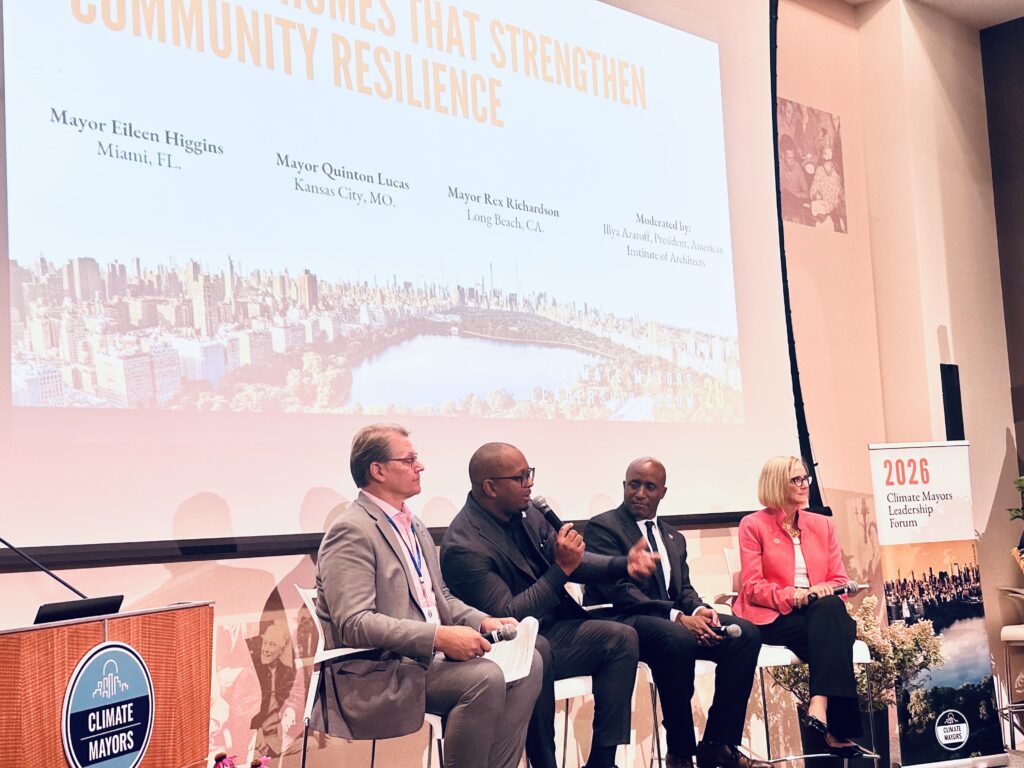
Mayor Richardson proudly shared the work that he is doing in the City of Long Beach to increase housing supply, improve energy affordability, expand transit access, and bring jobs closer to where residents live.
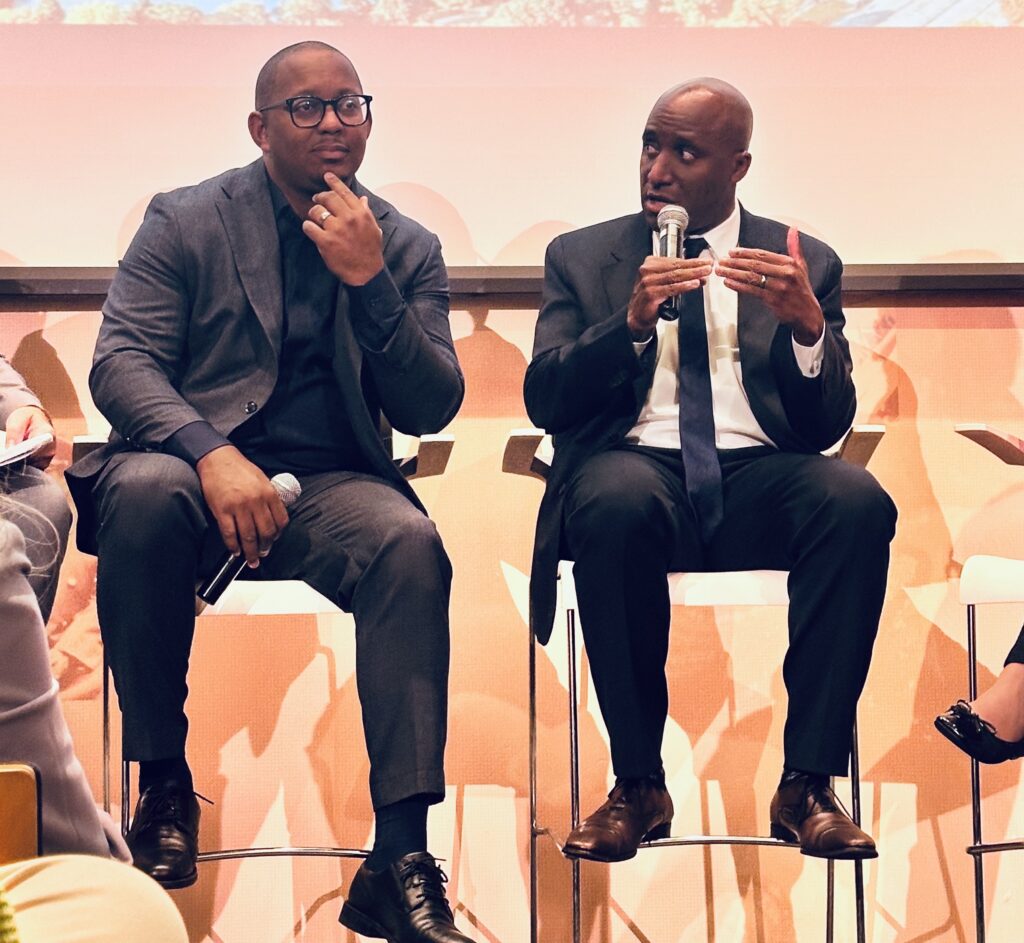
Mayor Lucas pointed out that it’s important for our housing discussions to embed resilience and climate. He also discussed the investments that he is driving in Kansas City to create more affordable housing, smarter land use, stronger building standards, and expanding the urban tree canopy.
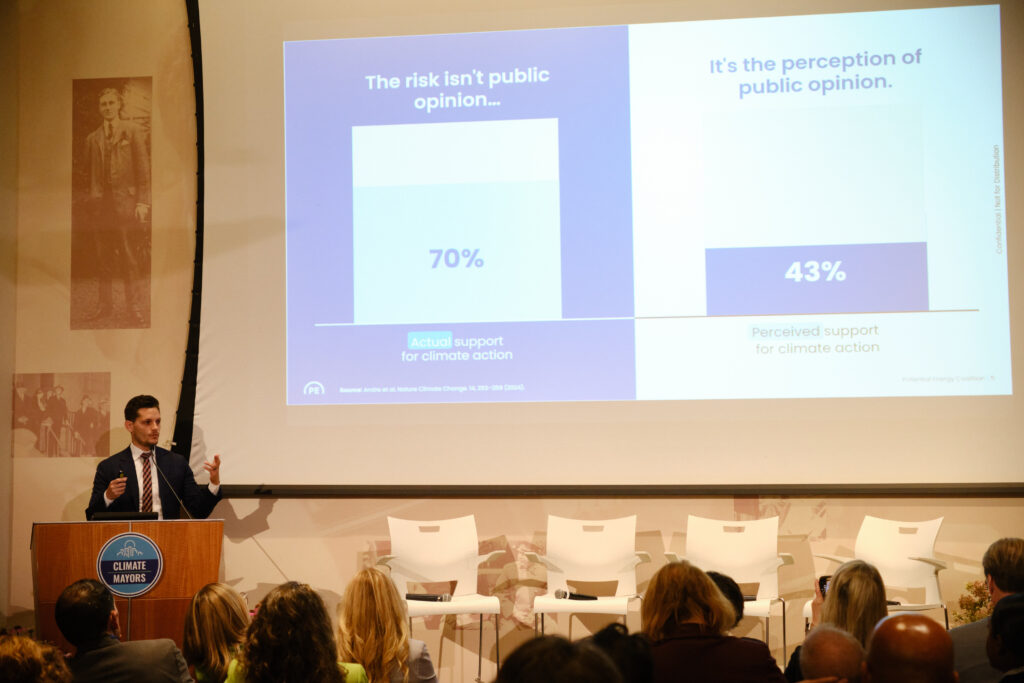
Mayors took careful notes as they heard from Potential Energy Executive Director Elan Strait who shared Potential Energy’s latest research showing public support for climate action is very strong, yet Americans underestimate that support. Mayors are the most trusted messengers on climate and there is opportunity for local leaders to shift climate messages from the abstract to the personal.
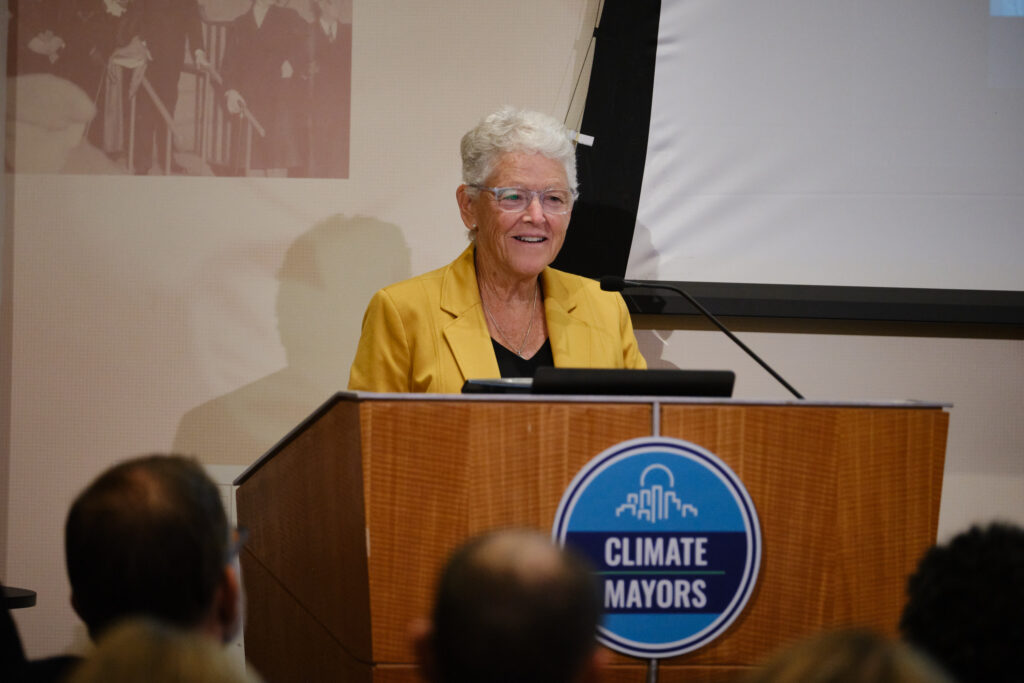
We also celebrated the winners of the Stories of Impact Challenge, announced by America is All In Co-Chair Gina McCarthy. Congratulations to Mayors Michelle Wu (Boston, MA), Leirion Gaylor Baird (Lincoln, NE), Emily B. Jabbour (Hoboken, NJ), Patricia Lock Dawson (Riverside, CA), Barbara Lee (Oakland, CA), Andre Dickens (Atlanta, GA), Randall Woodfin (Birmingham, AL), and Mike Johnston (Denver, CO) whose stories are a reminder that climate action is ultimately about people and making communities healthier, more affordable and better prepared for what comes next.
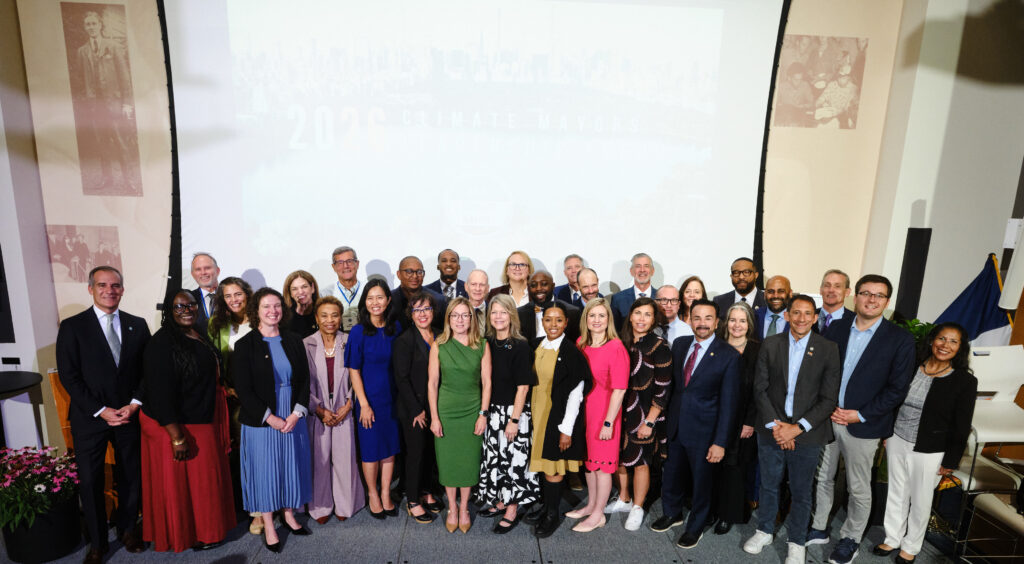
Thank you to all of our attending mayors!
Dorcey Applyrs, Albany, NY
Matt Tuerk, Allentown, PA
Tonya Graham, Ashland, OR
Steve Patterson, Athens, OH
Lacey Beaty, Beaverton, OR
Michael Cahill, Beverly, MA
Josh Ewing, Bluff, UT
Lauren McLean, Boise, ID
Michelle Wu, Boston, MA
Joseph Ganim, Bridgeport, CT
Katrina Evans, Campti, LA
Justin Bibb, Cleveland, OH
Barbara Buffaloe, Columbia, MO
Daniel Rickenmann, Columbia, SC
Erica Deuso, Downingtown, PA
Derrick Wood, Dumfries, VA
Salem Derby, Easthampton, MA
Mondale Robinson, Enfield, NC
Eddie Melton, Gary, IN
Arunan Arulampalam, Hartford, CT
Nicola Armacost (Mayor Emerita), Hastings-on-Hudson, NY
Roderick Hampton, Haynesville, LA
Joseph Ferris, Hudson, NY
Emily Jabbour, Hoboken, NJ
Quinton Lucas, Kansas City, MO
Indya Kincannon, Knoxville, TN
Rex Richardson, Long Beach, CA
Michael Owens, Mableton, GA
Victor De Luca, Maplewood, NJ
Eileen Higgins, Miami, FL
Barbara Lee, Oakland, CA
Kate Gallego, Phoenix, AZ
Angela Birney, Redmond, WA
Patricia Lock Dawson, Riverside, CA
Ryan Sorenson, Sheboygan, WI
Caroline Simmons, Stamford, CT
Martha Guerrero, West Sacramento, CA
Justin Brasch, White Plains, NY