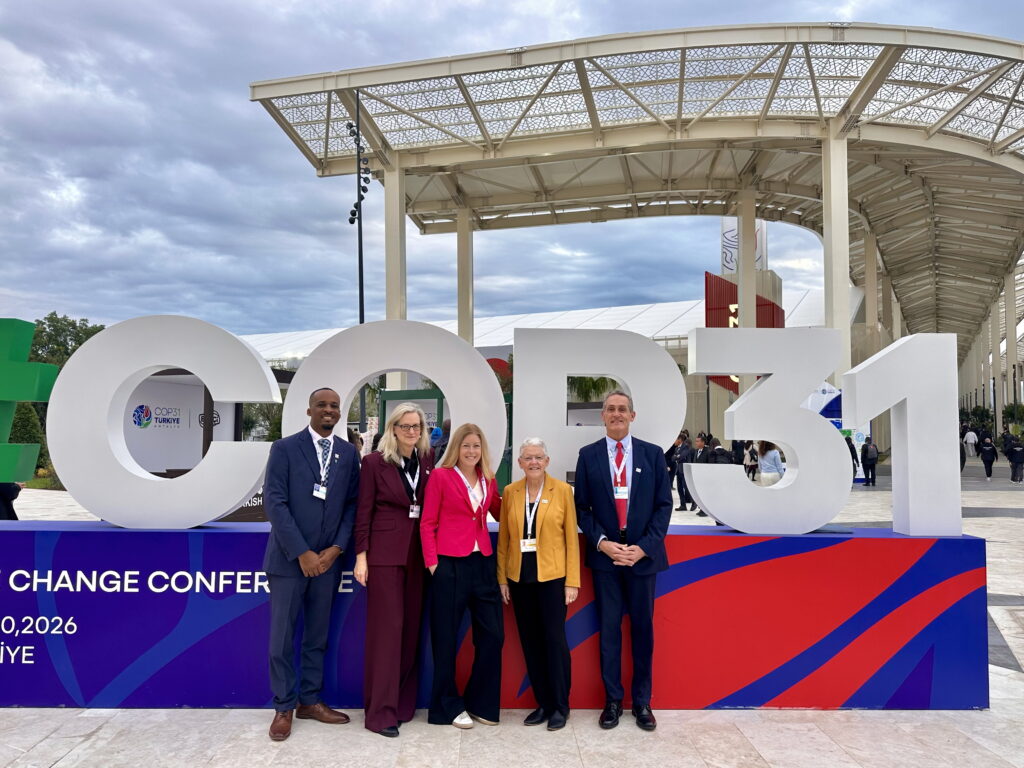
Antalya, Türkiye
Climate Mayors led a group of eight Climate Mayors from across the United States to take part at COP 31 in Antalya, Türkiye to share what American cities are doing on climate and to learn from counterparts around the world. Even as the summit closed without the international agreement many had worked toward, the mayors’ steady message holds: in cities and towns across America, the work continues.
Riding a wave of optimism buoyed by the recent midterm elections and the climate aspirations of communities across the country, eight mayors traveled to Antalya to represent American climate leadership:
Mayor Aaron Brockett, Boulder, CO
Mayor Michael Cahill, Beverly, MA
Mayor Janet Cowell, Raleigh, NC
Mayor Joe Ganim, Bridgeport, CT
Martha Guerrero, West Sacramento, CA
Mayor Roderick D. Hampton, Haynesville, LA
Mayor Nadia Mohamed, St. Louis Park, MN
Mayor Vicki Veenker, Palo Alto, CA
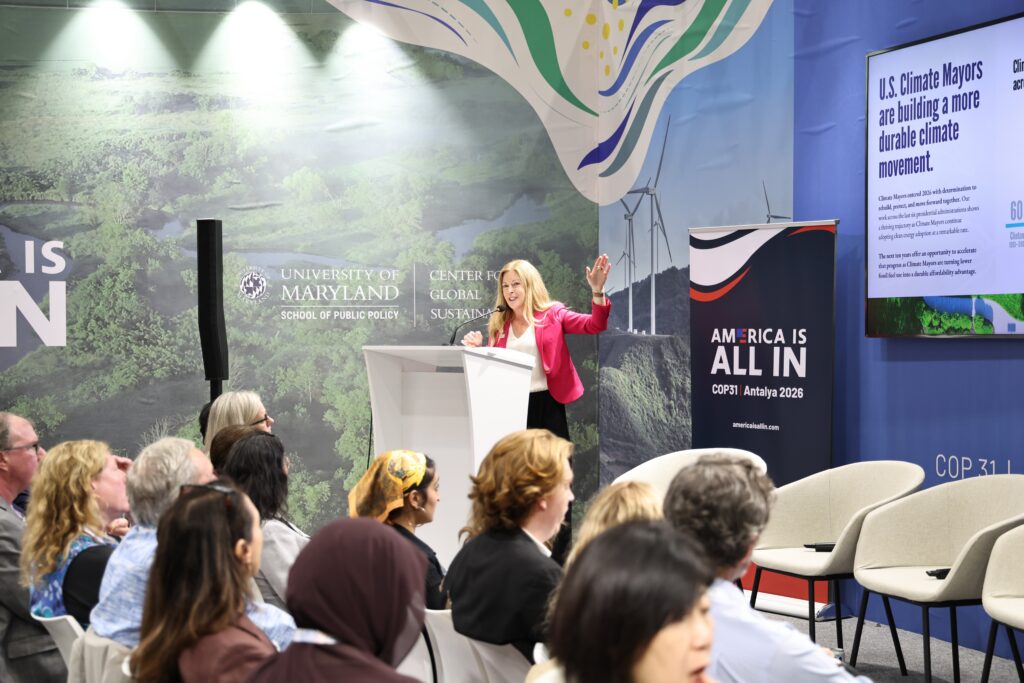
Climate Mayors Executive Director Kate Wright shared the results of the Climate Mayors Economy during the US Climate Mayors Building Resilient Communities and Thriving Economies panel. Data from the report shows that from 2019 to 2024, cities in the Climate Mayors network grew their economies by more than 11% while reducing fossil fuel use by more than 3%. Cities are already doing the work of turning climate action into economic opportunity, and they have a lot to contribute to the national conversation about what comes next.
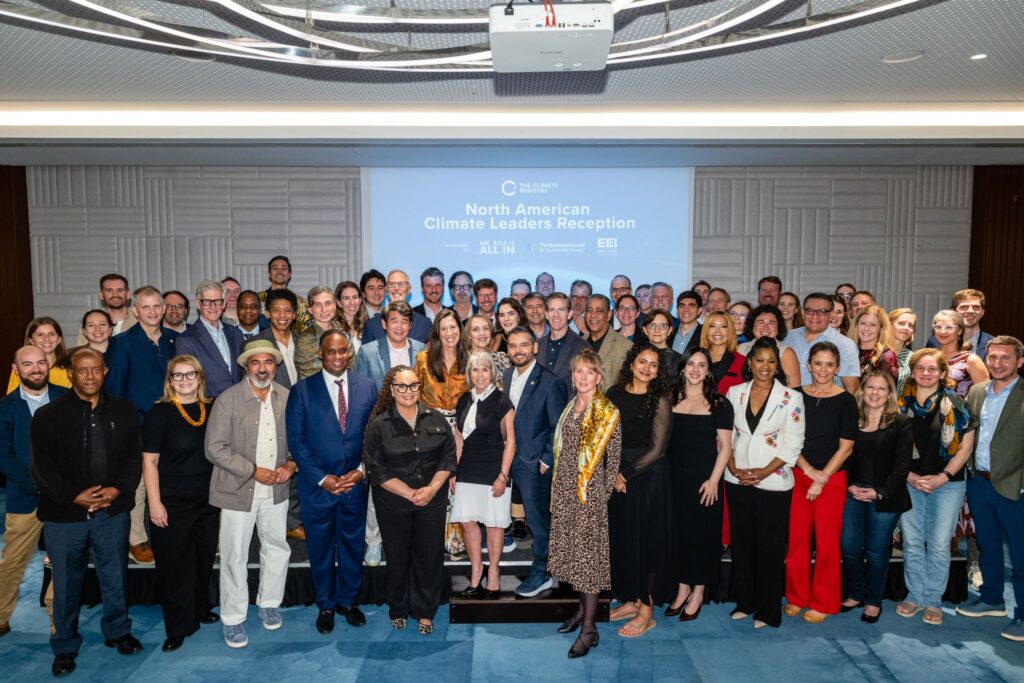
At the North American Climate Leaders Reception Wright engaged with members of the U.S. Congressional Delegation about the priorities that matter most to Climate Mayors’ cities, and how these priorities align with the findings of Congress’ latest Thriving Economy Project. From housing and energy affordability to weatherization, safe streets, and restoring critical funding, Climate Mayors are similarly focused on the policies that can make communities more affordable, resilient, and economically competitive.
Wright also shared how Climate Mayors’ leadership is helping mayors understand data center development through resources like our Model Local Law and Data Center Playbook. After the midterms, there is an opportunity for a new Congress to meet this moment—and our 350+ mayors are ready as Congress looks to hear directly from local leaders.
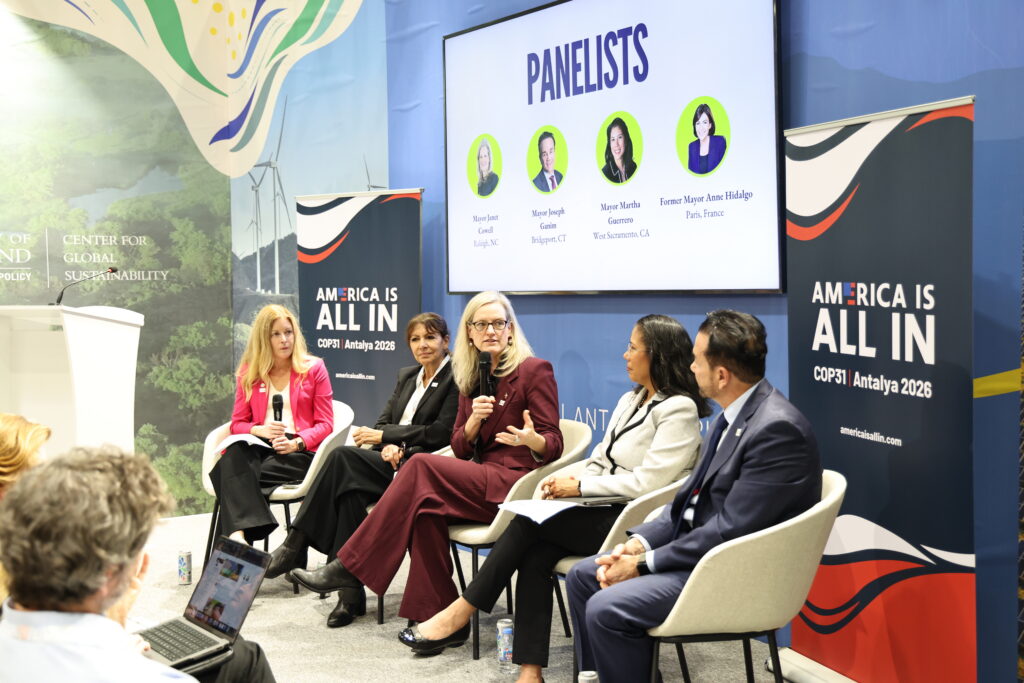
Raleigh Mayor Janet Cowell shared how the city’s wastewater-to-renewable-natural-gas system is fueling up to 50 city buses while reducing waste, cutting emissions, and lowering fuel costs. Bridgeport Mayor Joe Ganim shared what’s possible when you decommission coal facilities like the PSEG Harbor Station coal-fired power plant to make room for a different type of economic vision, while West Sacramento Mayor Martha Guerrero celebrated the Via West Sacramento on-demand transit program that has provided over 1.1 million rides, replacing more than 100,000 car trips, and avoiding over 200 metric tons of CO₂ a year.
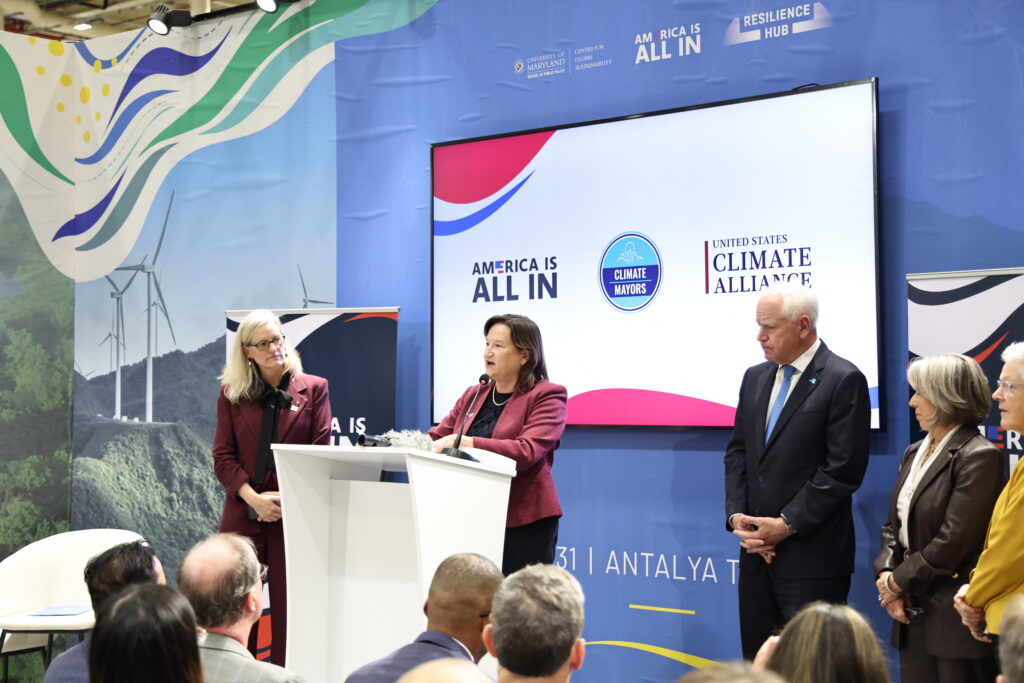
Mayors Cowell and Veenker took part in the Local Action, Global Partnerships Press Conference. Mayor Janet Cowell shared her excitement for being at her first COP while speaking out for people in her community who are vulnerable to extreme weather, like hurricanes. Mayor Vicki Veenker celebrated Palo Alto’s work cutting emissions. By 2025, the City has already cut emissions by 50% despite a 20% population increase. She also shared the work her city is moving forward to decarbonize the built environment as more than 1,000 people have taken advantage of heat pump incentives.
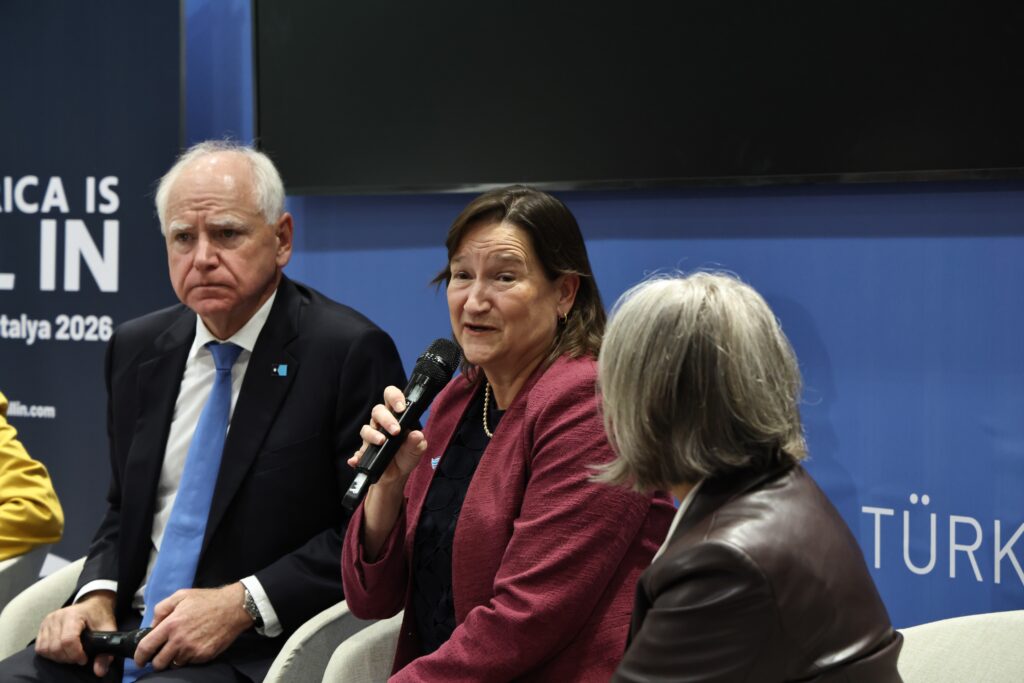
Mayor Veenker also spoke alongside Minnesota Governor Tim Walz and New Mexico Governor Michelle Lujan Grisham during a conversation showcasing the strength of subnational action and celebrating our new partnership with the U.S. Climate Alliance bringing together two of the country’s top state- and city-led climate action coalitions to ensure our progress remains durable.
Though Data Centers was not on the official COP agenda, it was the topic of many conversations among mayors, governors and Congressional leaders. Mayor Veenker moderated the panel Cleaner Cities, Cleaner Data Centers and also had an opportunity to meet with U.N. Secretary General António Guterres and other public officials.
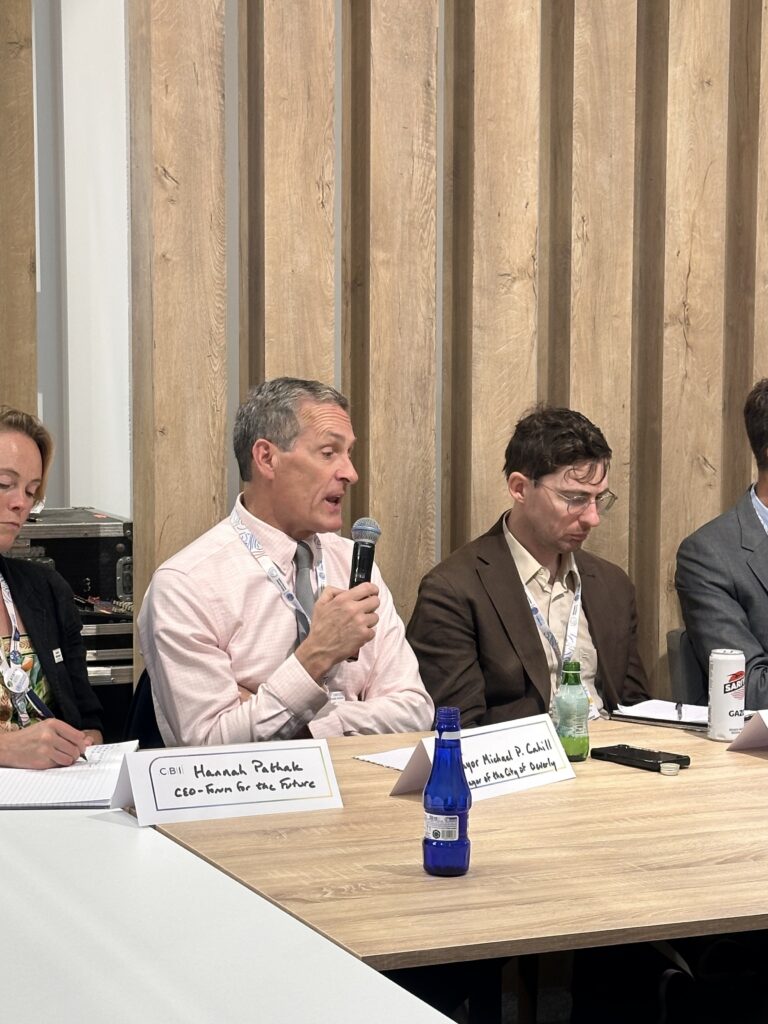
Mayor Michael Cahill brought Beverly’s experience to global conversations about how the clean energy transition can strengthen economies and modernize the grid. He joined Building a More Modern & Resilient Grid, hosted by the Business Council for Sustainable Energy and Edison Electric Institute (EEI), as well as the Confederation of British Industry’s Powering Growth: Seizing the Green Growth Opportunity senior roundtable.
With the green economy already outpacing the broader economy threefold in the UK, Cahill made the case for additional economic investment. In Beverly, the city is turning its clean energy investments into tangible benefits for residents—using electric school buses as mobile batteries that can send stored power back to the grid during periods of high demand, while generating revenue for the city. Through Beverly Community Electric, the city is also leveraging its collective buying power to secure more stable electricity rates for residents and local businesses, helping protect them from sudden price swings.
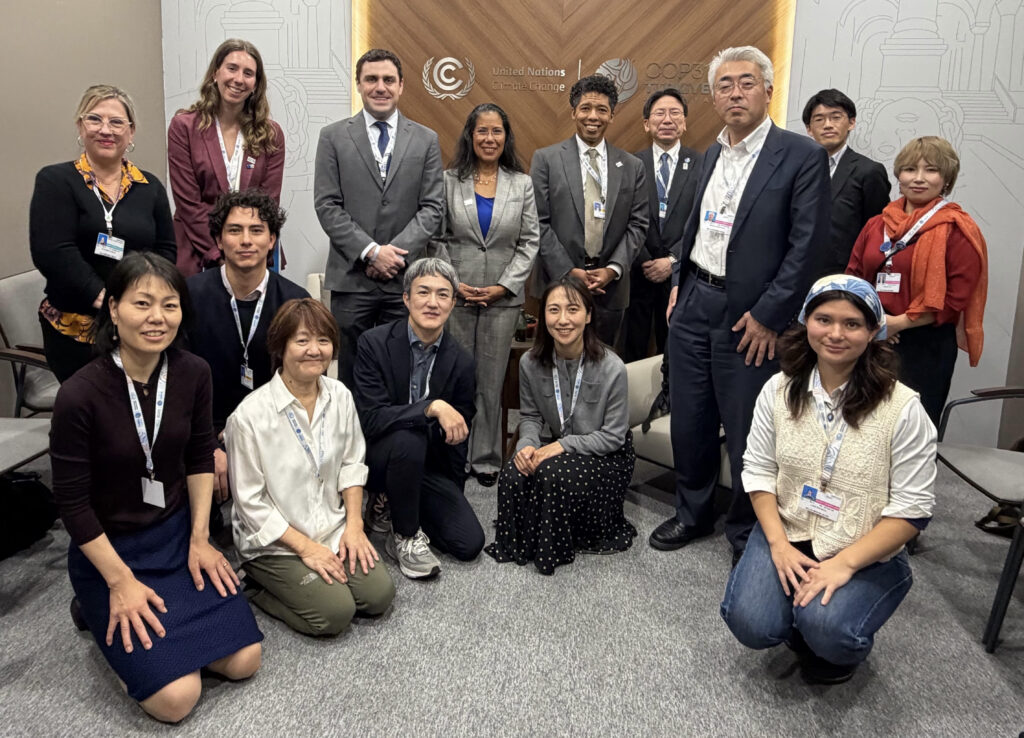
West Sacramento Mayor Martha Guerrero took part in bilateral discussions with members of the Japan Climate Initiative (above) and with numerous talks with representatives from the Kenyan Delegation and the European Committee of the Regions.
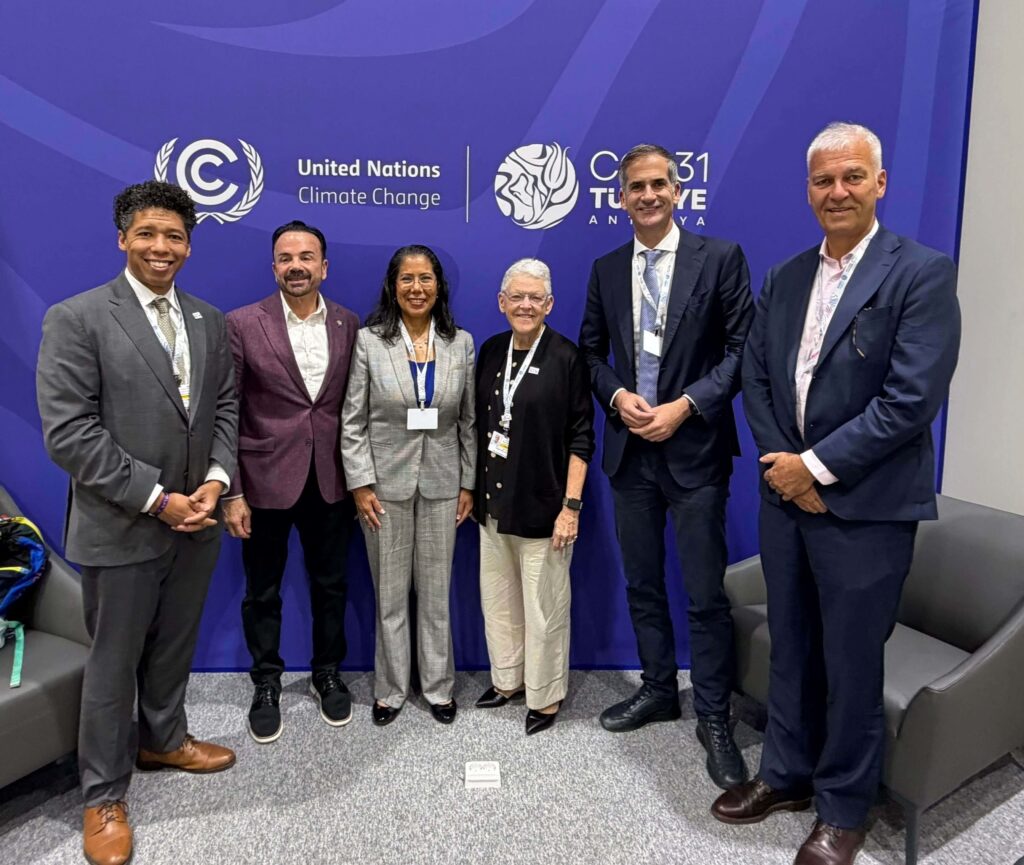
Mayor Guerrero and Mayor Joseph Ganim (Bridgeport, CT) after a bilateral meeting with Kostas Bakoyannismember of the European Committee of the Regions and Chair of its Commission for the Environment, Climate Change and Energy (ENVE).
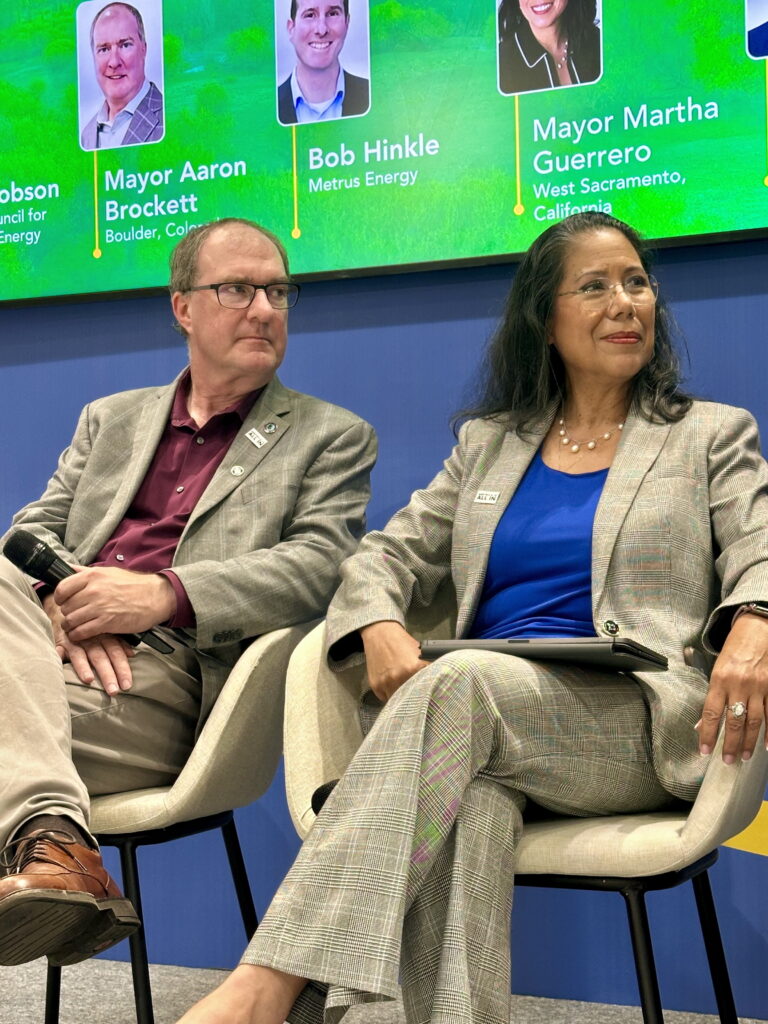
Our mayors also took part in the panel discussion, Public-Private Partnerships in Action-Delivering Energy Infrastructure, sharing strategies for how communities are finding ways to meet growing energy needs while building the infrastructure and workforce needed to support economic growth.
Boulder Mayor Aaron Brockett (above) discussed how Boulder is using a successful franchise agreement between the city and Xcel Energy to advance grid modernization and direct tens of millions of dollars toward undergrounding transmission lines—strengthening resilience, improving safety, and helping prevent wildfires. He was joined by West Sacramento Mayor Martha Guerrero who shared her city’s transit successes and how these investments are creating affordability while giving people access to critical resources.
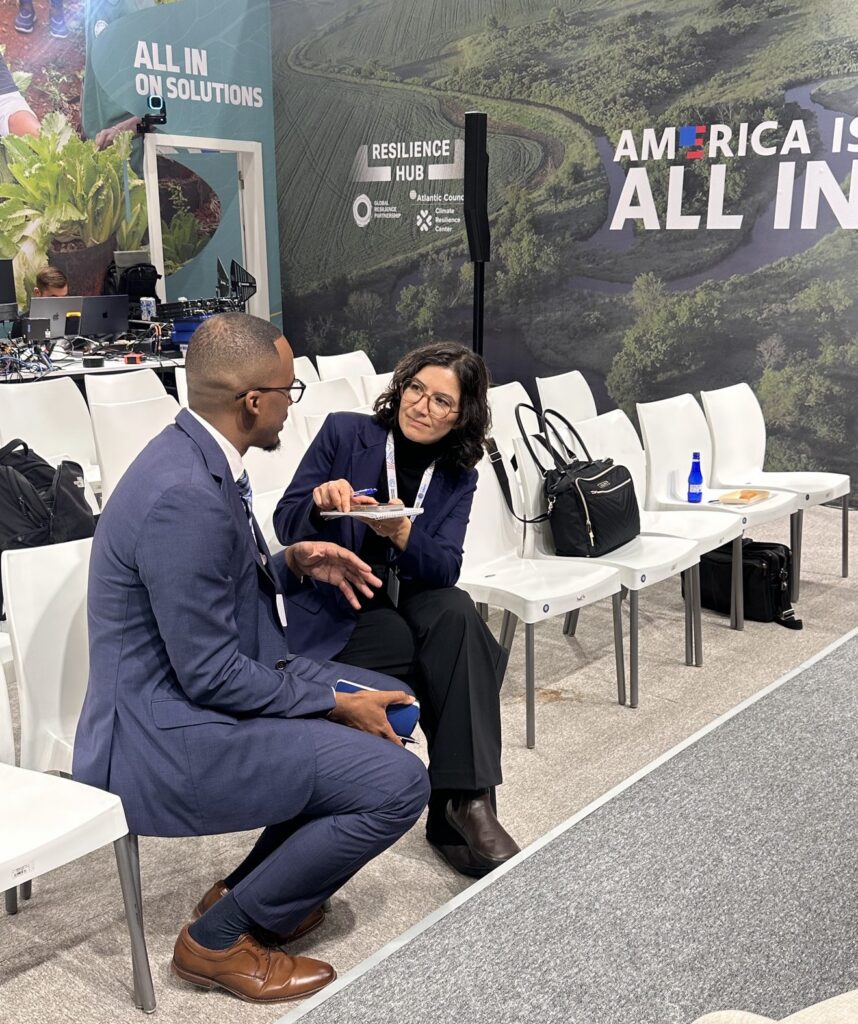
COP also proved to be an important platform for elevating the voices of rural mayors like Mayor Hampton of Haynesville, LA (speaking here with the BBC)—and highlighting how rural communities will be critical to delivering on the promise of clean energy for Americans.

While at COP, Mayors like Nadia Mohamed of St. Louis Park, Minnesota took to social media to highlight the importance of the U.S. subnational presence at the global climate gathering. She shared how her city is investing in shade infrastructure at its parks to help protect people from extreme heat and the work happening to power municipal operations with 100% renewable electricity.
While the U.S. federal government was notably absent, mayors took this opportunity to build relationships with leaders from around the world, meeting with representatives from Ghana, Kenya, Australia, Korea, Japan, the European Committee of the Regions, Caribbean nations, and others. They exchanged ideas, shared what they are learning in our communities, and brought home new perspectives on how our cities can tackle shared challenges.
Being at COP gave our delegation of local leaders a unique chance to stand together as Climate Mayors and declare that local climate leadership is durable and that it does not depend on any single administration or election. Our mayors left Antalya with a stronger sense of connection, a larger network of partners, and renewed momentum.